
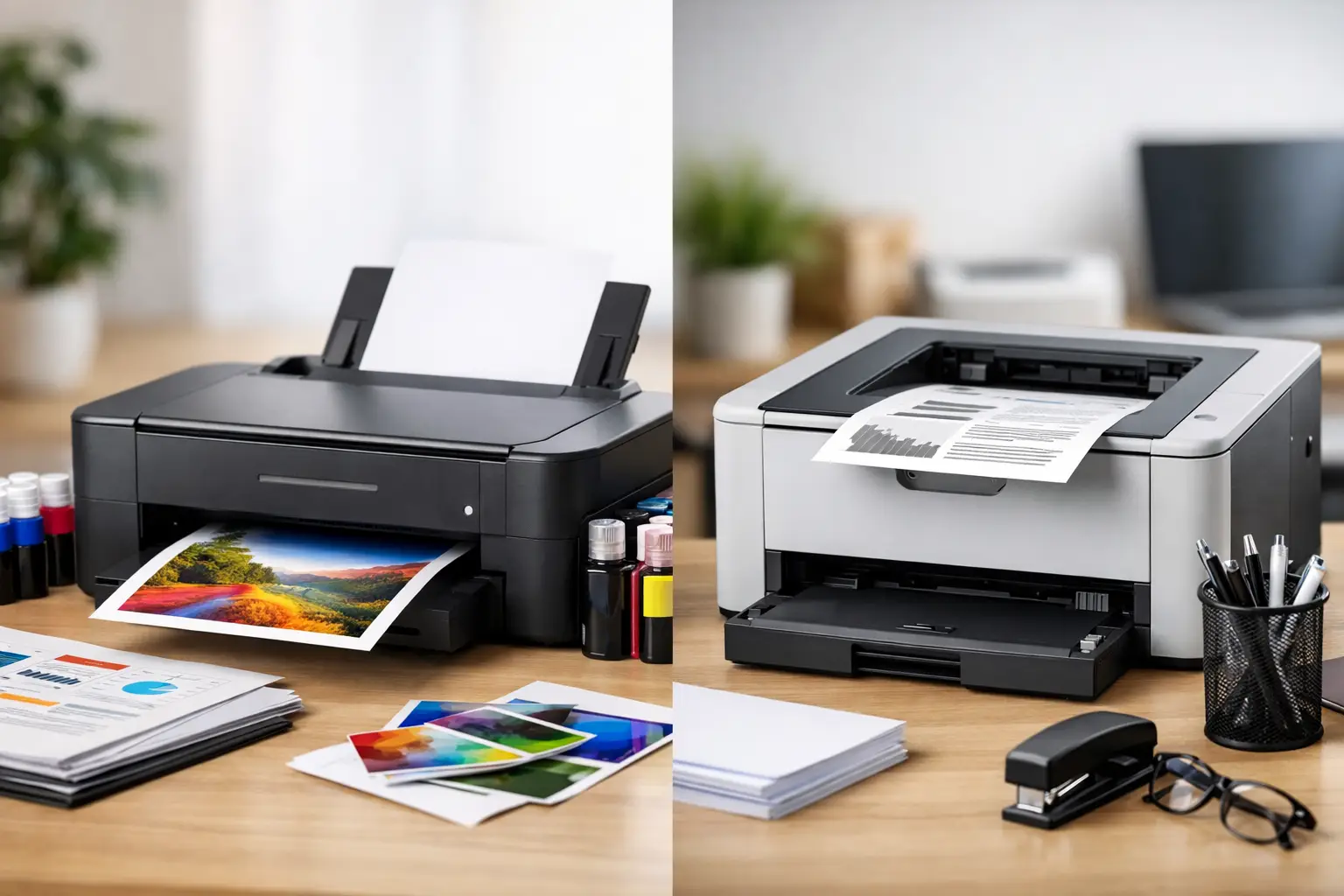
A printer that costs less at checkout can become expensive if it uses supplies quickly, while a higher-priced machine may save money over years of routine use. That is why the inkjet vs laser printing decision should start with what you print, how often you print, and what you expect each page to look like.
For occasional school assignments, colorful family photos, invoices, shipping labels, and busy office paperwork, there is no single winner. Inkjet and laser printers solve different problems. Choosing the right one can reduce supply costs, prevent last-minute cartridge issues, and keep everyday printing simple.
Inkjet vs Laser Printing: The Main Difference
Inkjet printers spray tiny droplets of liquid ink onto paper. This process is especially effective for detailed color, smooth shading, and photo printing. Most inkjet printers are compact, affordable to buy, and well suited to homes, students, and small offices with varied print jobs.
Laser printers use toner powder, heat, and a drum unit to fuse text and images onto the page. They are built for speed and volume. A laser printer is often the better fit when a business regularly prints contracts, reports, forms, statements, or black-and-white documents.
The difference matters when you replace supplies, too. An inkjet printer uses ink cartridges or refillable ink tanks. A laser printer uses toner cartridges and may also need a separate drum unit, depending on the model. Both types can be economical when you choose reliable compatible supplies made for your exact printer model.
Print Quality: Photos, Color, and Sharp Text
If photos are a priority, inkjet usually has the advantage. Quality inkjet printers can produce rich colors, subtle gradients, and attractive borderless photo prints on suitable photo paper. They also handle creative projects, invitations, flyers, and colorful school work very well.
Laser color printing has improved substantially and is excellent for business graphics, presentations, and everyday marketing materials. However, it may not match a photo-focused inkjet for glossy photographic detail. If your household prints vacation pictures, artwork, or images that need natural color variation, an inkjet is generally the safer choice.
For plain text, both printer types can look professional. Laser printers are known for crisp, consistent lettering, particularly across large batches of documents. Inkjet text can also be very sharp, but quality may vary more with paper type, ink level, and the printer’s print settings.
Speed and Volume: Where Laser Printers Pull Ahead
A laser printer usually starts making sense when printing is a regular business task rather than an occasional need. It can produce page after page quickly, with less waiting between print jobs. This is valuable for offices printing customer paperwork, training packs, invoices, packing slips, or reports.
Inkjet printers are not necessarily slow, especially for a few pages at a time. But printing a long document can take longer, and high-volume color work can use cartridges faster. For a home office that prints only a few documents each week, that trade-off may be perfectly reasonable.
Think about your busiest month, not only your quietest week. If you need 20 pages before a meeting, either printer can do the job. If you need hundreds of pages on a regular schedule, laser printing is usually more practical.
Upfront Cost vs Ongoing Supply Cost
Inkjet printers often have a lower purchase price. That can make them appealing for families, students, and anyone replacing a printer unexpectedly. The catch is that standard ink cartridges can have a lower page yield than toner cartridges, particularly when you print photos or large color areas.
Laser printers commonly cost more upfront, but toner can print far more pages before replacement is needed. For black-and-white document printing, the cost per page can be lower over time. This is one reason many small businesses choose monochrome laser printers for routine paperwork.
The best value is not always the printer with the lowest sticker price or the cartridge with the lowest price. Consider page yield, your typical mix of color and black printing, and whether the printer may sit unused for weeks. A high-yield compatible cartridge or toner can be a practical way to lower ongoing costs without changing your printer.
Compatible supplies are designed to work with specific printer models and can offer a budget-friendly alternative to premium OEM cartridges. The key is accuracy. Always match the cartridge number, printer model, and color requirement before ordering. A dependable supplier such as Inktoner Cartridge makes this easier by organizing replacement supplies by printer brand and cartridge type.
Maintenance and Reliability Considerations
Inkjet printers need occasional use. Liquid ink can dry in the printhead or nozzles when the printer sits idle for long periods, especially in warm or dry conditions. Running a small print job every week or two can help keep ink flowing. If print quality drops, a nozzle check or cleaning cycle may restore it, although cleaning uses ink.
Laser printers tend to be more forgiving when they are used less often. Toner is a dry powder, so it does not dry out the same way liquid ink can. This makes laser a strong option for a home office that prints irregularly but needs clear documents whenever the need arises.
That said, laser printers have their own maintenance needs. Some models use separate drum units, transfer belts, fusers, or waste toner containers. These parts do not need replacing as frequently as toner, but they are worth checking before you buy. Understanding the full supply setup helps avoid surprises later.
Which Printer Fits Your Needs?
Your everyday jobs should guide the choice. An inkjet printer is often the right match if you print color materials, photos, children’s projects, or a modest number of pages each month. It can give you flexibility without taking up much desk space.
A laser printer is often a better investment if you print mainly text documents, need faster output, or manage regular printing for a team. A monochrome laser printer can be especially cost-effective for invoices, forms, records, and shipping paperwork. Choose a color laser only when you genuinely need frequent business-quality color documents.
Before buying a printer or replenishing supplies, ask yourself these practical questions:
- Do you print photos and color images, or mostly black text?
- Will you print a few pages each week or hundreds each month?
- Does the printer sit unused for long periods?
- Do you need compact size, automatic duplex printing, scanning, or copying?
- Are high-yield replacement cartridges or toner readily available for the model?
These answers are more useful than choosing based on a single sale price. A printer that matches your habits is easier to maintain and less likely to interrupt work when supplies run low.
A Smarter Way to Manage Printer Supplies
Once you choose between inkjet and laser, keep a spare cartridge or toner on hand for the supplies you use most. Waiting until an empty cartridge stops a deadline-sensitive print job is rarely convenient. Record your printer model and cartridge number somewhere easy to find, such as inside a desk drawer or on a note near the printer.
For inkjet owners, use the printer regularly and avoid removing cartridges unless replacement is necessary. For laser owners, store toner flat in a cool, dry place and handle drum units carefully, as they can be sensitive to light and fingerprints.
The right printer is the one that supports your real workload at a price that fits your budget. Choose inkjet when color and photo quality matter most, choose laser when speed and document volume lead the decision, and keep the correct compatible supplies ready so printing stays dependable when you need it.