
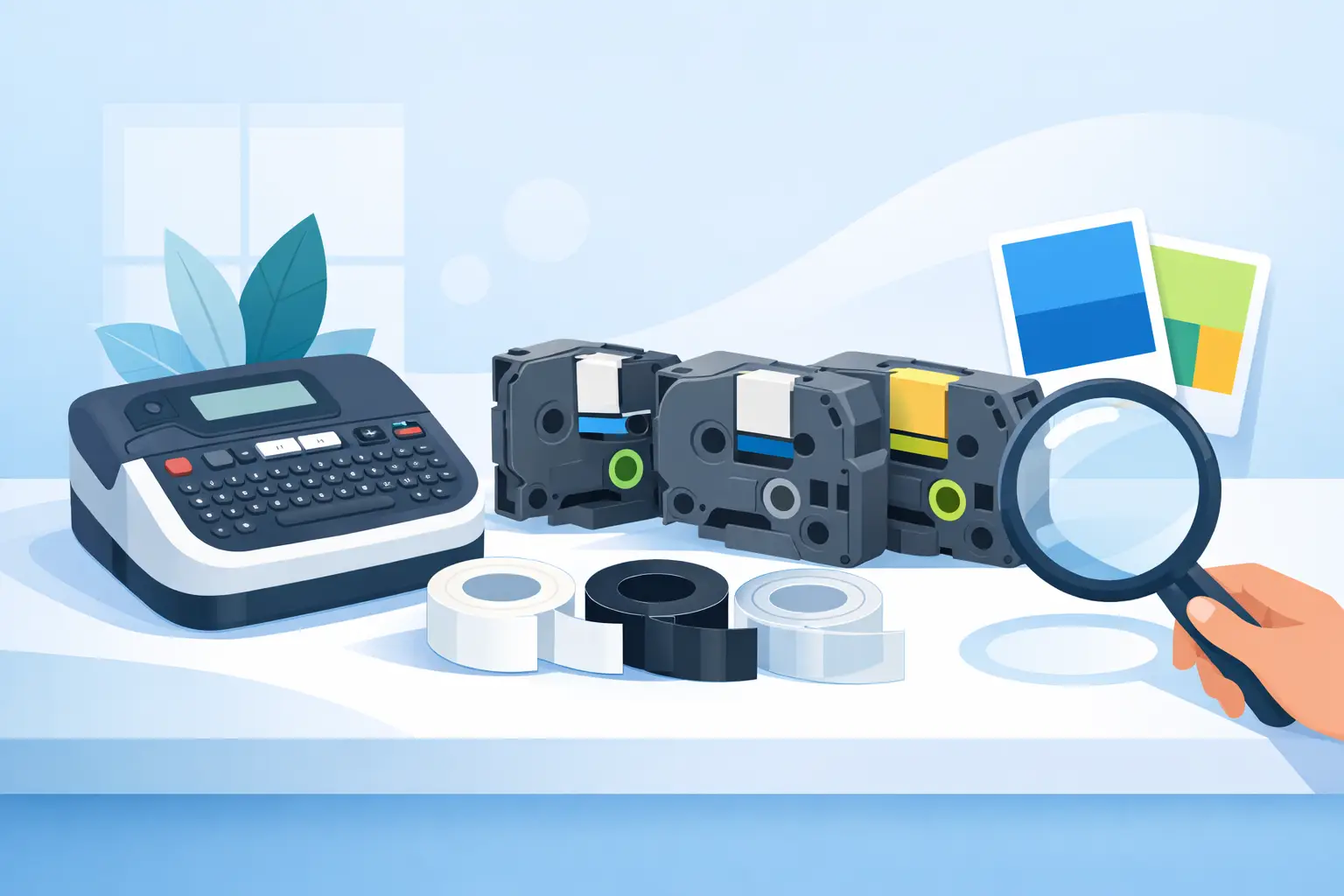
A label maker is only as useful as the tape inside it. Choose the wrong Brother P-Touch label tape and you may end up with labels that are too wide for a folder tab, too weak for a garage bin, or simply incompatible with your machine. Choose the right one, and everyday organizing becomes quicker, clearer, and easier to maintain.
For home users, students, and busy small businesses, the goal is not to overthink label tape. It is to get dependable labels that fit the job, work with the correct Brother P-Touch model, and stay within budget. A few simple checks before ordering can prevent delays and keep your home office, stockroom, classroom, or workspace organized.
Start With Your Brother P-Touch Model
The first thing to check is your label maker model or the tape series it uses. Brother P-Touch machines are designed for specific tape cassette families, and tapes that look similar can still be incompatible. The model number is usually printed on the front, back, or underside of the label maker. It may also appear in the instruction manual or inside the cassette compartment.
Many popular Brother P-Touch label makers use TZe-style laminated tapes, while older machines may use TZ tapes or another cartridge format. In practical terms, the cassette type matters more than the label maker’s appearance. Before adding tape to your cart, match the tape series to the model listed on your machine.
This is especially useful when ordering for an office with several label makers. A compact desktop unit, a handheld organizer, and an industrial-style label printer may not all accept the same cassette. Checking first is faster than dealing with an unopened tape that cannot be used.
Pick the Right Tape Width for the Job
Tape width changes both the look and usefulness of a label. Narrow tape is ideal when space is limited, while wider tape improves readability from a distance. There is no single best width for every task.
A 1/4-inch or 3/8-inch tape works well for small items such as charging cables, file tabs, spice jars, earbuds cases, and stationery. It keeps labels neat without covering the item itself. For everyday folders, storage boxes, school supplies, and office equipment, 1/2-inch tape is often the most practical choice.
Wider 3/4-inch or 1-inch tape is better for larger bins, shelves, warehouse locations, safety reminders, and equipment labels. The larger print is easier to read from across a room, which can save time in busy work areas. If you regularly label containers or stock shelves, wider tape is usually worth keeping on hand.
Keep in mind that a wider cassette may not fit every compact label maker. Your machine’s specifications will confirm the maximum tape width it can print.
Choose a Color Combination That Is Easy to Read
Color is not only about appearance. It helps people find information quickly. Black text on white tape remains the most versatile option for general labeling because it is clear, professional, and suitable for almost any environment.
Black on clear tape is a good choice when you want the label to blend into the surface. It is commonly used on glass jars, clear storage containers, cable tags, and electronics. White text on black tape creates a high-contrast look that works well on dark bins, black folders, and equipment.
Colored tape can make categories easier to identify at a glance. For example, one color can be used for incoming stock, another for archived files, and another for household storage. For a family, different colors can separate school supplies, pantry items, and personal belongings without needing long label names.
For business use, consistency matters more than novelty. Choose a simple color system that staff can understand quickly and repeat when tape needs replacing. A mixed pack can be useful when you need variety, but standard black-on-white tape is often the best value for frequent, everyday printing.
Why Laminated Brother P-Touch Label Tape Matters
Most people expect a label to stay put, but labels are often exposed to more than expected. Kitchen containers get wiped down, garage bins collect dust, office equipment is handled daily, and cables are moved during repairs. Laminated tape is made for these common conditions.
Laminated Brother P-Touch label tape typically has a protective top layer over the printed text. This helps the label resist fading, moisture, smudges, scratches, and normal handling better than basic paper labels. It is a sensible option for items that need to remain identified for months or years, not just a few days.
That said, tape performance still depends on the surface. For the strongest result, apply labels to a clean, dry, smooth area. Dust, oil, moisture, and textured plastic can reduce adhesion. Press the label down firmly from one end to the other, then allow the adhesive time to settle before heavy handling.
Match the Adhesive to Where the Label Will Go
Standard adhesive tape is suitable for most indoor jobs: folders, storage tubs, classroom supplies, pantry jars, desks, and general office organization. It provides dependable hold without adding unnecessary cost.
For demanding surfaces or conditions, stronger adhesive may be the better choice. Extra-strength tape can be useful for rough plastic, metal shelves, outdoor storage items, toolboxes, and frequently handled equipment. It costs more than standard tape, so it makes the most sense where ordinary labels are likely to lift or peel.
Cable labels are another special case. If you are labeling power cords, network cables, chargers, or audio leads, look for tape suited to wrapping or flagging. Standard labels can work for a quick identifier, but purpose-designed cable tape gives a cleaner result and remains easier to read once cords are bundled together.
The practical question is simple: will the label sit untouched in a drawer, or will it face friction, moisture, heat, movement, or regular cleaning? Buy for the conditions rather than paying for heavy-duty adhesive where it is not needed.
Compatible Tape Can Be a Smart Everyday Choice
Original brand tape is familiar, but it is not the only option for regular labeling. High-quality compatible label tape is designed to fit supported Brother P-Touch machines while offering a more budget-friendly way to handle routine replacement needs.
This can make a real difference for small businesses that label inventory, folders, shelves, products, and equipment throughout the week. It also helps households that use a label maker for food storage, moving boxes, kids’ school gear, and home office supplies. When you print labels often, replacement costs add up.
Compatibility should always be checked carefully. Look for the supported tape series, width, text and tape color, and adhesive type before ordering. A reliable compatible option should be clearly identified by cassette format, making it easier to select the right tape without guessing.
At Inktoner Cartridge, customers can find affordable label tape options for common labeling needs, helping reduce the cost of staying organized without sacrificing day-to-day convenience.
Order Enough Tape for the Work Ahead
One cassette can last a long time for occasional home use, but tape disappears faster during a move, office cleanup, stocktake, classroom setup, or new filing project. Ordering a spare cassette in your most-used size and color prevents the familiar interruption of running out halfway through a job.
For most users, keeping black text on white laminated tape as the everyday backup is a safe choice. If you use labels for several purposes, add clear tape for discreet labeling and a wider cassette for storage bins or shelves. Buying a multipack may offer better value when you know you will use several colors or widths.
Store unopened cassettes in a cool, dry place away from direct sunlight. This keeps them clean and ready when the next organizing task comes up.
A Better Label Starts With a Simple Check
Before you order, confirm your P-Touch model, cassette series, preferred width, tape color, and adhesive needs. Those few details are enough to narrow down the right choice and avoid unnecessary returns or lost time.
A good label does more than name an item. It makes the next task easier, whether that means finding a file in seconds, putting stock back in the right place, or finally knowing which charger belongs to which device. Keep the tape that suits your regular jobs nearby, and your label maker will stay one of the most useful tools in the room.