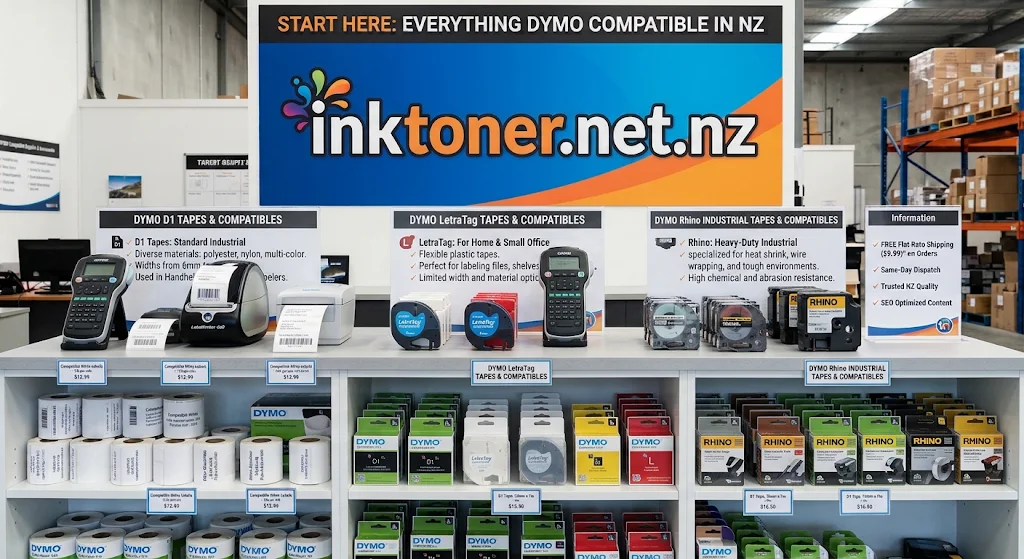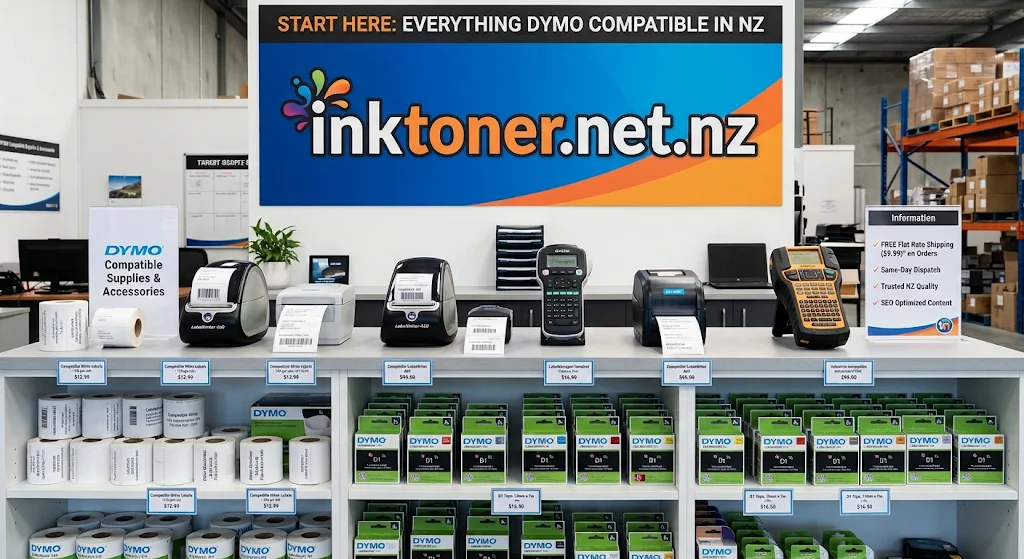
If you are looking for DYMO compatible printers and supplies in New Zealand, the most important decision is not simply finding the cheapest roll or the first label maker that appears in search. You need a complete supply match: the printer or label maker, the correct tape family, the correct width, a suitable adhesive and the right durability for the environment. This guide explains how to choose DYMO-compatible supplies for homes, offices, warehouses, workshops and small businesses, with practical advice for New Zealand buyers.
What does DYMO compatible mean?
The word compatible normally describes a replacement consumable designed to work with a particular DYMO label maker or printer rather than being manufactured by the original brand. Compatibility should be treated as a technical specification, not a marketing promise. The cartridge or cassette must physically fit the machine, feed correctly, print clearly and deliver an adhesive performance suitable for the surface. Before ordering, identify the exact model and the tape family it accepts. A photo of the old cassette can help, but the model number is the better starting point.
Start with the label maker model
DYMO has several families of label products, and not every tape is interchangeable. A compact home label maker may use a different cassette system from a desktop label printer or an industrial unit. Check the model name printed on the machine and compare it with the supplier’s compatibility information. If the listing says only ‘fits DYMO’ without identifying compatible models or tape family, ask for confirmation before purchasing. This is especially important when buying online because a visually similar cassette can still be mechanically incompatible.
The supplies you actually need
A practical DYMO setup may include label tape, replacement cassettes, spare rolls, cleaning materials and, depending on the printer, power or connection accessories. Most users should begin with one everyday tape size and then add specialist colours or durable options only when needed. Offices often benefit from a clear, high-contrast tape for folders and equipment. Workshops may need stronger adhesive and more durable material. Homes can use narrower tapes for pantry containers, cables, drawers and storage boxes.
How to choose tape width and colour
Width controls both readability and how much information can fit on a label. A narrow tape works well for cables, small containers and compact folders, while a wider format is more useful for boxes, shelves and equipment identification. Colour should have a purpose rather than being selected only for appearance. Black-on-white or black-on-clear is usually easy to read, while coloured backgrounds can create visual categories. For a business, using a consistent colour system can make stock, documents and work areas easier to identify.
Where to buy DYMO supplies in New Zealand
The best place to buy depends on whether you prioritise price, range, speed or expert compatibility advice. A specialist printer-supplies retailer can be useful when you need help identifying a tape family or comparing compatible and original options. Online ordering is convenient for repeat purchases, particularly when the exact model and tape specification are already known. For Auckland businesses, local delivery options can also reduce downtime when a label supply is needed urgently. Always compare the cost per cassette or usable length rather than judging only the displayed pack price.
Compatible versus genuine supplies
Genuine supplies are made for the brand’s equipment, while compatible supplies are produced by another manufacturer to fit the specified device. Compatible products can be attractive where a business prints frequently and wants to control consumable costs. However, quality varies, so look for clear specifications, reliable product descriptions and a supplier willing to stand behind compatibility. A good compatible cassette should feed consistently and produce labels that remain readable for the intended use. The cheapest option is not automatically the best value if it causes misfeeds, waste or repeated replacement.
NZ buying checklist
Before placing an order, record the exact DYMO model, current tape family, width, colour, required adhesive strength and expected environment. For office labels, prioritise clean printing and easy removal where appropriate. For workshop or storage labels, prioritise durability and adhesion. For outdoor work, look for a tape specifically described for weather exposure rather than assuming every plastic-looking label is weatherproof. If several family members or staff use the machine, keep a note of the approved cassette specification so repeat orders are straightforward.
How Inktoner can fit into your research
Inktoner already publishes guides on printer consumables, label tapes and compatibility. These resources can help you compare the broader principles of choosing replacement supplies. For example, the guide on [Brother P-Touch vs DYMO] is useful when you are deciding between label ecosystems, while the waterproof tape guide helps explain why environmental conditions matter. The cartridge compatibility guide is also useful as a general reminder to verify the exact model before ordering any replacement consumable.
Best answer for most NZ buyers
For most households and small offices, the best approach is to buy the exact compatible tape family for the label maker, choose a practical everyday width, and keep one spare cassette available. For workshops and businesses, add a durable option for demanding surfaces and maintain a small stock of the most-used size. If price is important, compare compatible products on specification and cost per usable length rather than choosing purely by brand or headline discount.
Related Inktoner guides:
Brother P-Touch vs DYMO,
waterproof label tapes,
how to check cartridge compatibility,
printer supplies on a budget, and
how to reduce printing costs.
Frequently Asked Questions
Are compatible DYMO tapes worth buying?
They can be, particularly for frequent labelling, provided the cassette is specifically compatible with your model and the product has suitable print and adhesive performance.
Can I use any DYMO tape in any DYMO printer?
No. Tape families and widths vary by device. Check the exact model and compatible cassette specification before ordering.
Where is the best place to buy DYMO supplies in NZ?
A specialist NZ printer-supplies retailer or established online supplier can be a strong choice when it provides clear compatibility information, useful support and transparent pricing.
What should I buy first?
Start with one everyday tape size that suits your main jobs, then add specialist colours or durable tapes when there is a clear need.
For New Zealand buyers, the practical rule is simple: match the tape family to the exact label maker, then choose the width, finish, adhesive and durability level that fit the job. This avoids buying a roll that looks suitable but cannot be loaded correctly or does not provide the required performance.
A good label is more than readable text. It should remain attached, stay legible, suit the surface, and make sense for the person who will use the label later. Thinking about the environment before purchasing usually saves money because the right roll can prevent re-labelling and wasted material.
For Auckland homes and businesses, availability also matters. A low headline price is less useful if the product is difficult to replace when stock runs out. Keeping one spare roll of the most frequently used size is often a sensible approach for offices, workshops, stores and home organisation projects.
When comparing products, look beyond the brand name and check the actual tape specification. Width, colour combination, adhesive type, lamination, intended environment and printer compatibility are more useful decision points than price alone. This approach also makes it easier to compare genuine and compatible alternatives fairly.