
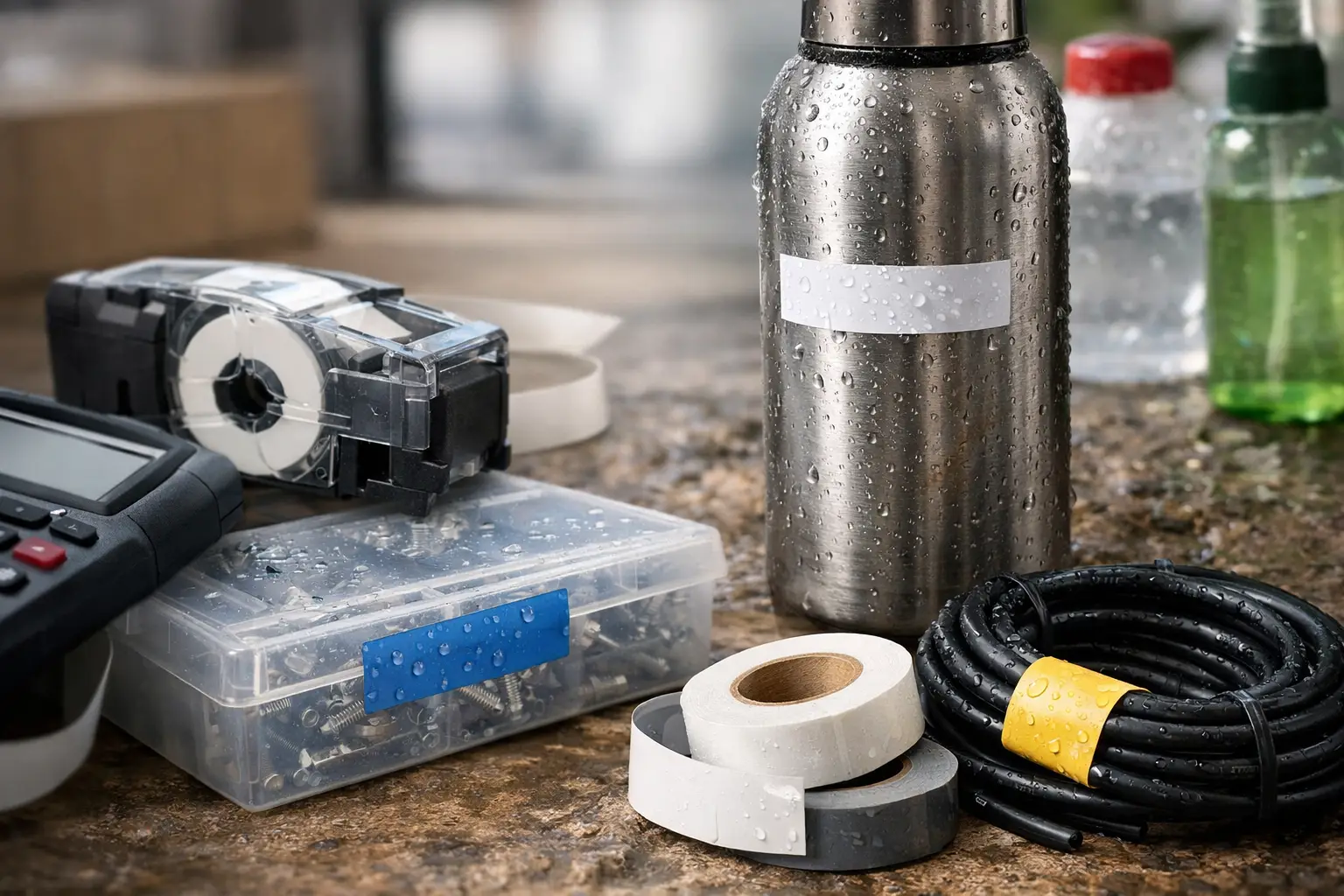
A label on a pantry jar is useful until a wet hand smears it. A bin label works until it spends a season in a damp garage. The best waterproof label tapes are made for the places where ordinary paper labels quickly fail: kitchens, bathrooms, lunchboxes, storage areas, workshops, and outdoor equipment.
For most homes and small businesses, the right choice is not simply the thickest tape or the most expensive cartridge. It is the tape that fits your label maker, sticks to the surface you have, and stays readable after water, handling, temperature changes, and cleaning. That practical fit matters more than a dramatic waterproof claim on the package.
What Makes a Label Tape Waterproof?
Waterproof performance comes from the tape material, printed text, and adhesive working together. Laminated label tapes are usually the dependable choice for everyday wet or high-contact environments. Their clear protective layer helps shield the printed lettering from moisture, rubbing, oils, and routine cleaning.
This is different from a basic paper label, which can absorb water at the edges and lose print clarity quickly. It is also different from a label that is merely water-resistant. Water-resistant tape may handle a few splashes. A quality laminated tape is better suited to repeated wiping, condensation, wet hands, and occasional washing.
Still, waterproof does not mean indestructible. No label tape is guaranteed to remain perfect forever when placed under constant water, exposed to harsh chemicals, or stuck to a dirty, uneven surface. If you are labeling gear that stays outside year-round, chemical containers, or items that go through commercial dishwashers, check the tape specifications for that exact use.
Best Waterproof Label Tapes by Job
The best tape depends on where the label will live. Choosing by application helps you avoid buying a tape that looks right but does not hold up where you need it.
For kitchens, pantries, and food containers
Laminated black-on-white tape is the practical default. It is easy to read, works with most organizing systems, and suits containers, spice jars, reusable bottles, freezer bags, and pantry bins. Black print on white tape offers strong contrast even in low cabinet light.
For dark containers, black appliances, or stainless-steel drink bottles, white-on-clear or white-on-black tape can look cleaner and be easier to see. Clear tape is especially useful when you want the label to blend into glass jars or clear storage containers.
Kitchen labels face moisture, grease, and frequent handling. Wipe the container dry before applying the tape, then press firmly along the full label. Give the adhesive time to settle before placing the item in the refrigerator, freezer, or sink area.
For bathrooms and laundry rooms
Bathroom and laundry labels need to handle humidity first, then splashes. Laminated tapes are a reliable option for drawer organizers, cleaning bottles, supply bins, medicine cabinets, and laundry containers.
Choose a tape width that matches the item. Narrow tape can look neat on spray bottles and small containers, while wider tape is easier to read on shelving, large baskets, and shared household storage. There is little value in using extra-wide tape on a tiny bottle if the label becomes harder to position than it is to read.
Be careful with textured plastic bottles and flexible pouches. Adhesive may not grip as well on heavily curved, rough, or squeezable surfaces. In those cases, apply the label to a smooth flat section whenever possible.
For garages, workshops, and storage
Garages and workshops ask more from a label. Temperature swings, dust, oil, and regular handling can all shorten a label’s life. Use laminated tape with a strong adhesive for tool drawers, parts bins, power cords, storage totes, and shelving.
For long-term storage, readability should be your first priority. White tape with black text is usually the most functional option. Clear labels can look polished, but they may disappear against a busy background. A bold, consistent labeling system saves time when you need to find a part, cable, or supply quickly.
If you are labeling outdoor storage bins or equipment, use a tape rated for outdoor exposure when available. Water resistance alone is not the whole picture. Sunlight can fade some materials over time, while heat and cold can weaken adhesion on certain plastics.
For offices, schools, and shared equipment
Waterproof tape is also useful indoors where labels receive constant contact. Think shared chargers, file boxes, laptops, classroom supplies, cables, shipping shelves, and inventory bins. These labels may not be soaked in water, but they are touched, wiped, moved, and rubbed every day.
For office organization, a standard laminated tape gives a good balance of durability, clean appearance, and affordable replacement cost. Compatible label tapes can be a smart option for routine labeling when you want dependable results without paying premium OEM prices for every cartridge.
Choosing the Right Tape Width and Color
Tape width affects usability more than many buyers expect. A narrow tape is suitable for cables, small folders, spice jars, and compact containers. Medium-width tape works well for general home and office labels. Wider tape is best for shelving, warehouse bins, large storage totes, and labels that need to be read from a distance.
Color should support fast recognition, not just appearance. Black on white remains the easiest all-purpose combination. White on black creates strong contrast for dark surfaces. Black on yellow works well for warnings, temporary job-site marking, and equipment identification. Clear tape suits glass and smooth, light-colored items where a discreet finish matters.
Avoid using decorative color combinations if they make the text difficult to read. A label system only works when everyone in the household or workplace can understand it at a glance.
Compatibility Comes Before Price
Before ordering label tape, check the brand and model of your label maker. Brother P-touch and DYMO machines use different tape formats, cassette designs, and widths. Even within one brand, not every tape fits every printer.
Look at the cartridge already in your machine or confirm the model number on the device. Then match the tape series, width, and color. This quick check prevents the most frustrating label-supply problem: receiving a tape cassette that cannot be installed.
Compatible tapes are designed to fit selected machines and offer a budget-friendly alternative to branded originals. They can be a practical choice for homes, home offices, and businesses that print labels regularly. The sensible approach is to buy from a reliable supplier, confirm compatibility carefully, and choose tape suited to the job rather than paying more for features you will not use.
How to Help Waterproof Labels Last Longer
Even high-quality tape benefits from proper application. Start with a clean, dry surface. Remove dust, grease, moisture, and residue from cleaners or oils. If the surface has recently been washed, let it dry completely before labeling.
Apply the tape to the flattest area available and press firmly from one end to the other. Avoid placing labels across deep curves, seams, textured grips, or moving parts. For containers that will be handled often, leave a small margin around the tape rather than placing it right at an edge where fingers can catch it.
For freezer containers or items used in cold spaces, apply labels at room temperature first. Adhesive generally bonds better before the item is chilled. For outdoor items, place labels where they receive less direct sun and less abrasion from hands, tools, or straps.
When Waterproof Tape Is Not the Best Choice
There are times when a waterproof label is unnecessary. For temporary moving labels, short-term event signs, or files that stay in a dry cabinet, standard paper labels may be more economical. If the label needs to be removed cleanly after a few days, a permanent adhesive tape can create more work than it saves.
On the other hand, do not use a basic temporary label for items that need clear, lasting identification. Cleaning supplies, electrical cables, food containers, stock bins, and shared equipment are all easier to manage when the label stays put and remains readable.
A good label tape should reduce confusion, not become another item to replace. Choose a laminated, compatible tape that matches your machine and your environment, apply it to a clean surface, and your everyday organization will keep working long after ordinary labels have peeled away.